
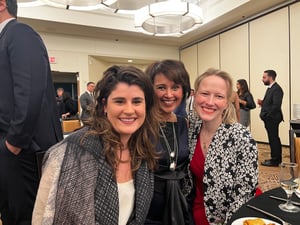
Kiri Lang is halfway through her scholarship at Michigan State University with her mentor Purnima Kumar. Time to reflect on the achievements of the first six months as well as the tasks and the excitement ahead.
Can you summarize the hypothesis and aims of your scholarship project please?
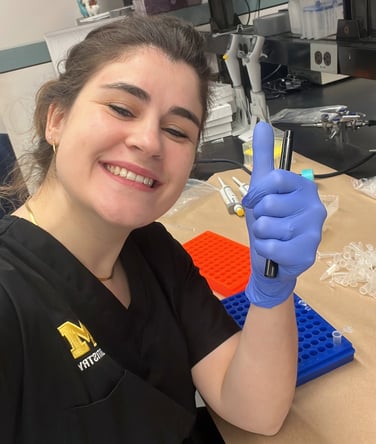
The central hypothesis of the project is that anatomical peri-implant factors, e.g. KT, STH, mucosal thickness, vestibular depth are associated with distinct peri-implant microbial signatures and may contribute to disease-specific microbial patterns. The primary aim is to investigate the influence of these anatomical variables on the peri-implant microbiome across peri-implant health, mucositis, and periimplantitis. Since the beginning of the scholarship, my main contribution has been the analysis of a peri-implant microbiome dataset investigating the association between anatomical peri-implant factors and microbial community composition.
What’s the outlook for the upcoming months?
During the next six months, my main focus will be on completing the data analysis and further investigating the association between anatomical peri-implant factors and the peri-implant microbiome. The following steps will include data interpretation, discussion of the findings, and preparation of the results for publication. In parallel, I will continue to participate in research activities within the department.
Why did you apply for the Osteology Research Scholarship, and for this centre in particular?
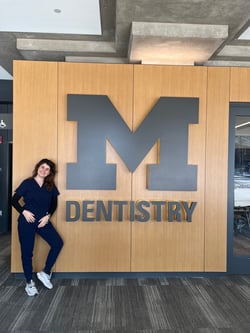
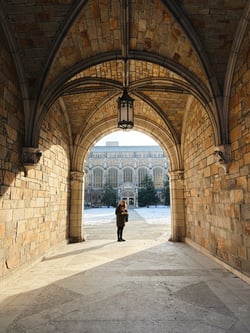
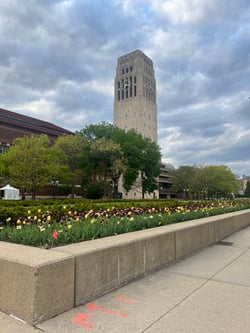
My decision to apply for the Osteology Research Scholarship and to choose the University of Michigan was strongly influenced by the institution's extraordinary legacy in periodontology. Ann Arbor is the birthplace of many landmark studies that have shaped our current understanding of periodontal disease and therapy, particularly through the pioneering work of Sigurd Ramfjord. Equally important, Michigan continues to be one of the world's leading centers for dental research and is internationally recognized for its contributions to oral microbiology and microbiome science. The possibility of conducting research in an environment that combines such a rich scientific history with frontline microbiome research made it my first choice for this fellowship.
What did you expect to learn during this scholarship year, and to which extent have your expectations been met so far?
One of my main expectations for this scholarship was to gain experience in a different academic environment and to broaden my perspective on periodontology and research. Spending a year abroad is always valuable, both professionally and personally, as it provides the opportunity to step outside familiar structures and learn from different approaches.
As a periodontist trained in Bern, it has been particularly interesting to experience the same specialty on the other side of the Atlantic Ocean. While many aspects of periodontology are remarkably similar, there are also notable differences in research culture, postgraduate education, and clinical training. Observing these differences firsthand has given me a better understanding of how the same specialty can be approached in different ways. I also hoped to expand my knowledge of oral microbiology and microbiome research. These expectations have largely been met. Besides working on my own research project, I have been involved in regular literature discussions, clinical research activities, and microbiome data analysis. Particularly valuable has been the opportunity to work in a highly international environment and to exchange ideas with colleagues from different educational and cultural backgrounds. These experiences have provided insights not only into research, but also into the many different ways periodontology is taught and practiced around the world.
How do you experience the mentoring and social environment so far?
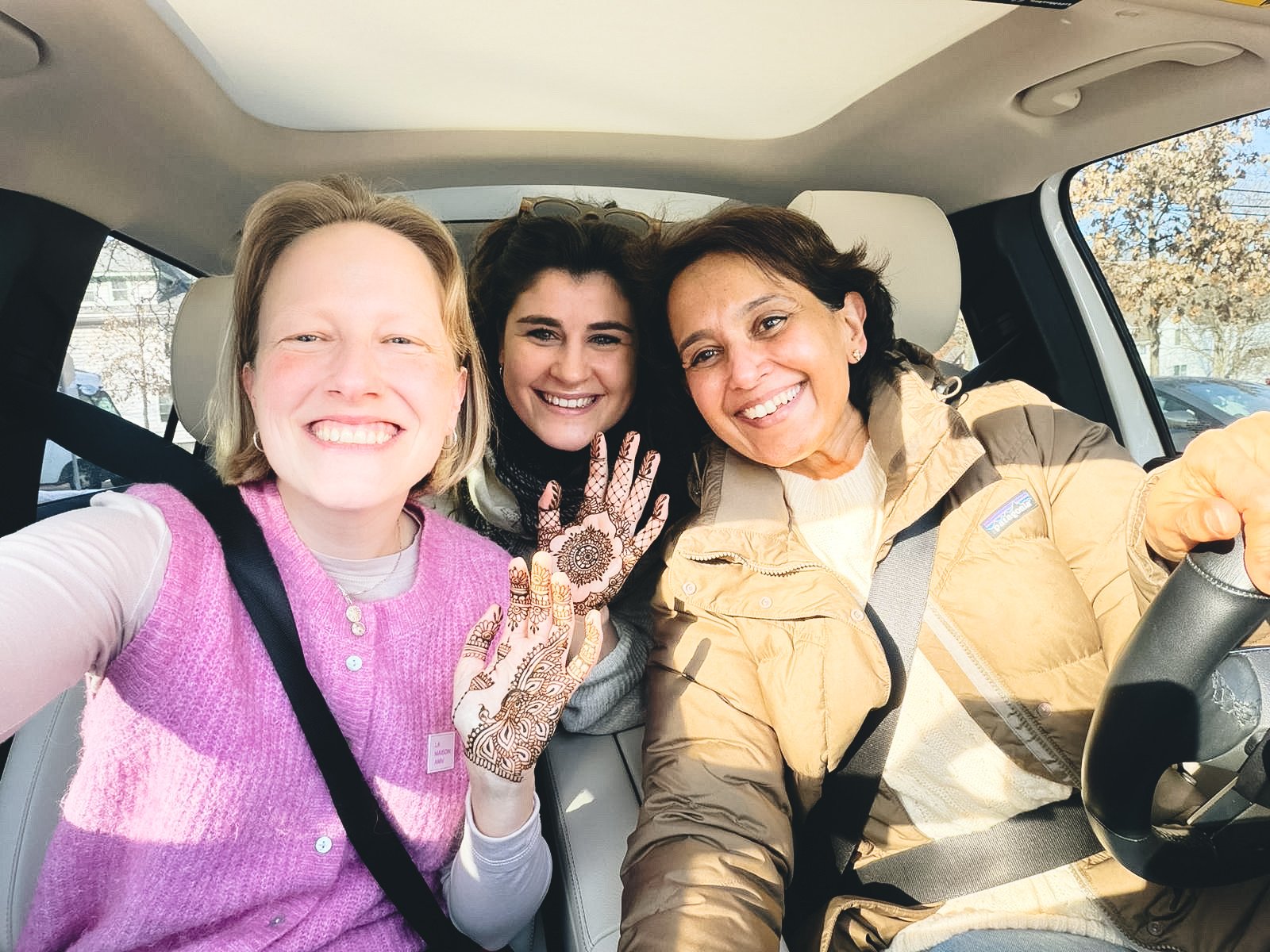
The mentoring and social environment could honestly not be better. Prof. Purnima Kumar has been a fantastic mentor throughout my stay. What I admire most is her energy and positivity. Whenever you speak with her, it feels as if nothing is impossible. Despite her extremely busy schedule, she always finds time for residents, students, and scholars, which is something I greatly appreciate. The same is true for the rest of the faculty. From the very beginning, everyone has been very welcoming, approachable, and supportive. I was immediately made to feel part of the department, and whenever questions arise, there is always someone willing to help. The residents have also played a major role in making this experience enjoyable. Their openness and willingness to share their experiences have made it easy to integrate into the group. Ann Arbor itself contributes a lot to this atmosphere. It is a classic university town, and most people have moved here specifically because of the University.
Learn more about the Osteology Research Scholarships